
Market Data
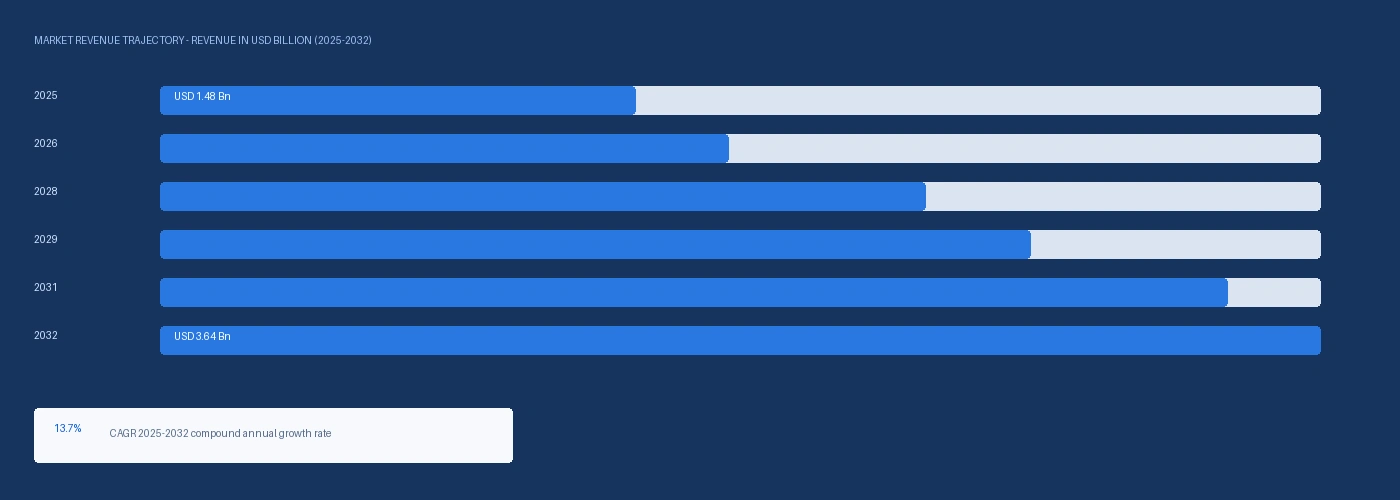
The global biodegradable stretch film market size was USD 1.48 Billion in 2025 and is expected to register a revenue CAGR of 13.7% during the forecast period. Market revenue growth is supported by certified compostable stretch film converters in Germany producing above 24,000 metric tonnes of DIN CERTCO certified biodegradable stretch film in 2024 confirmed by industry production data, PLA-based blends holding approximately 60% of material use in biodegradable stretch film applications due to their adaptability in co-extrusion systems and compatibility with existing stretch film converter equipment at typical PLA content of 45% to 70% combined with PBAT to balance tensile strength and elasticity, and EU Packaging and Packaging Waste Regulation requirements adopted in 2024 mandating recycled content and recyclability standards for packaging placed on the EU market where certified compostable stretch film entering biowaste streams qualifies as organic recycling and supports brand owner packaging sustainability declarations. BASF SE, through its partnership with Fabbri Group Italy announced in February 2020, developed Nature Fresh cling film for fresh food packaging using BASF ecovio certified compostable bioplastic, representing the first commercial fresh food cling film application of certified compostable biodegradable polymer stretch film at Italian retail scale. TIPA Corp Ltd, based in Israel and the Netherlands, produces certified compostable flexible packaging films including stretch and cling film applications with EN 13432 and ASTM D6400 certification targeting food retail, fresh produce, and artisan food packaging. Futamura Chemical Co. Ltd produces NatureFlex cellulose-based biodegradable film for specialty food packaging applications requiring moisture-barrier performance alongside compostability. For instance, in February 2020, BASF SE, Germany, partnered with Fabbri Group, Italy, to develop Nature Fresh, a certified compostable cling film for fresh food packaging using ecovio bioplastic, with Fabbri Group developing the stretch film application and BASF providing the certified compostable polymer compound, establishing the first EN 13432-certified fresh food cling film at Italian modern trade retail scale. These are some of the key factors driving revenue growth of the market.
Biodegradable stretch film in the food retail segment relies on PLA-PBAT blend chemistry providing load retention values of 12 to 17 Newtons per square millimetre confirmed in co-extrusion film trials at BASF, Futamura, and TIPA, meeting stretch film technical requirements for machine wrap applications at 120 to 150 metres per minute processing speed. The average film gauge in biodegradable stretch film dropped by approximately 17 microns without loss in holding force in trial applications per converter testing data, demonstrating that material efficiency improvements are narrowing the cost disadvantage against conventional LLDPE stretch film through downgauging. Germany's logistics and packaging zones including Hamburg and North Rhine-Westphalia confirmed deployment of DIN CERTCO certified stretch films in over 110 logistics operations in 2024, with over 150 small and medium-sized enterprises integrating biodegradable stretch film into packaging lines. China's domestic biodegradable stretch film producers are implementing starch-PBAT hybrid stretch film formulations registered under the CCME packaging registry with 60 or more domestic vendors active in the certified biodegradable stretch film segment. These are some of the key factors driving revenue growth of the market.
However, biodegradable stretch film faces functional performance limitations relative to conventional linear low density polyethylene stretch film in high-force pallet wrapping applications where LLDPE at 10 to 12 Newton pallet holding force over 48-hour shipping periods provides consistent load retention that current PLA-PBAT blend stretch film cannot match at equivalent gauge without reformulation trade-offs in cling performance or temperature sensitivity. Biodegradable stretch film is susceptible to performance degradation at elevated temperatures above 40 degrees Celsius and under high humidity conditions that occur in ambient logistics and food retail environments during summer months, creating seasonal performance reliability concerns that LLDPE stretch film does not exhibit. Pricing of biodegradable stretch film at approximately USD 3,200 to USD 4,800 per metric tonne represents a premium of 2 to 3.5 times conventional LLDPE stretch film at USD 1,200 to USD 1,600 per metric tonne, limiting adoption to food retail, organic food, and premium e-commerce segments. These factors substantially limit biodegradable stretch film market growth over the forecast period.
Industry Trends & Market Dynamics
Certified compostable film output by German converters surpassing 24,000 metric tonnes in 2024 and PLA-based blends holding approximately 60% of biodegradable stretch film material use confirm that the stretch film segment has moved past proof-of-concept and into volume converter adoption, with food retail and logistics driving specifications that are structurally different from what conventional LLDPE stretch film has been asked to deliver
Germany's packaging certification and composting infrastructure combination, with DIN CERTCO certified industrially compostable stretch film accepted in German industrial composting systems and over 110 logistics zones confirmed as deploying DIN CERTCO certified stretch films in 2024, provides the commercial evidence base for biodegradable stretch film adoption at logistics scale that was unavailable prior to 2022. German certified compostable film converter output surpassing 24,000 metric tonnes in 2024 represents a material volume that confirms commercial production and conversion infrastructure for biodegradable stretch film is operational at scale in Europe's largest economy. Over 150 German small and medium-sized enterprises integrating biodegradable stretch film into packaging operations demonstrates adoption extending beyond large multinational FMCG brand owners into the SME food retail, organic food distribution, and premium e-commerce sectors. PLA-based blends at approximately 60% material share with typical 45% to 70% PLA content combined with PBAT at 300 to 500 millimetre standard widths and machine wrap processing at 120 to 150 metres per minute confirm that biodegradable stretch film is technically integrated into standard European film processing equipment without capital investment in new wrapping machinery. Food Retail Cling Film and Organic Food Segment Driving Premium Biodegradable Stretch Film Specification Fresh food counter cling film in European food retail is the highest-value biodegradable stretch film application, with BASF ecovio and Novamont Mater-Bi certified compostable cling film specified by Italian, German, and French delicatessen and fresh food retailers where conventional PVC or PVDC cling film disposal creates contamination of paper and cardboard recycling streams from residual food contact, but certified compostable cling film enters food waste biowaste streams without sorting requirement. Fabbri Group's Nature Fresh certified compostable cling film using BASF ecovio, commercially launched at Italian modern trade retail through the February 2020 partnership, established the certified compostable fresh food cling film segment in the Italian food retail market and has expanded to German and French food retail since its Italian commercial launch. Novamont's Mater-Bi EF51 film series, certified under EN 13432 with complete disintegration within 90 days verified by TUV Austria, is specified for fresh food packaging at European food retailers implementing organic waste collection programmes. TIPA Corp's certified compostable flexible packaging portfolio targeting premium fresh food brands in Europe and North America is growing at above-market rates as premium food brand owners in the UK, Germany, and France implement certified compostable primary packaging specifications.
Standard pallet wrapping at industrial logistics scale requires stretch film providing at minimum 150% to 200% elongation without break, sustained holding force over 12 to 48 hours transit exposure, and resistance to temperature cycling between minus 5 and 40 degrees Celsius. Current commercial PLA-PBAT blend stretch films achieve 12 to 17 Newtons per square millimetre holding force in food retail applications but have not been qualified for full industrial pallet wrapping at the elongation and temperature performance required for pharmaceutical, heavy industrial, or refrigerated food logistics applications. Biodegradable stretch film at USD 3,200 to USD 4,800 per metric tonne represents a 2 to 3.5 times premium above conventional LLDPE stretch film at USD 1,200 to USD 1,600 per metric tonne, recoverable in premium organic food retail and certified compostable e-commerce packaging but not in cost-competitive industrial pallet wrapping. Composting infrastructure for EN 13432 certified stretch film exists reliably only in European countries with mandatory biowaste separate collection, meaning that biodegradable stretch film placed in markets without this infrastructure delivers its compostability credential to landfill rather than industrial composting. The Strait of Hormuz supply disruption confirmed by the IMF in March 2026 has elevated biodegradable stretch film resin costs through PLA feedstock logistics and PBAT fossil precursor cost increases, adding approximately USD 80 to USD 140 per metric tonne to compound cost above the 2024 baseline. These factors substantially limit biodegradable stretch film market growth over the forecast period.
Segmentation
| Segmentation Basis | Sub-segments | Leading Segment |
|---|---|---|
| Material | PLA-Based Stretch Films, PBAT-Based Stretch Films, PHA-Based Stretch Films, Starch-Blend Stretch Films | PLA-Based Stretch Films |
| Application | Pallet Wrapping, Food Wrap and Cling Film, Produce and Fresh Food Wrap, Industrial Bundling, Agricultural Covering | Pallet Wrapping |
| End Use | Food Retail, Logistics and Warehousing, E-commerce, Food Processing, Horticulture | Food Retail |
| Region | North America, Europe, Asia-Pacific, Latin America, Middle East and Africa | North America |
PLA-Based Stretch Films segment is expected to account for a significantly large revenue share in the global biodegradable stretch film market during the forecast period.
This report evaluates material across PLA-Based Stretch Films, PBAT-Based Stretch Films, PHA-Based Stretch Films, Starch-Blend Stretch Films for bioplastics & recycled, with segment-level positioning, share outlook, and downstream demand context imported directly from the research document.
This report evaluates application across Pallet Wrapping, Food Wrap and Cling Film, Produce and Fresh Food Wrap, Industrial Bundling, Agricultural Covering for bioplastics & recycled, with segment-level positioning, share outlook, and downstream demand context imported directly from the research document.
This report evaluates end use across Food Retail, Logistics and Warehousing, E-commerce, Food Processing, Horticulture for bioplastics & recycled, with segment-level positioning, share outlook, and downstream demand context imported directly from the research document.
This report evaluates region across North America, Europe, Asia-Pacific, Latin America, Middle East and Africa for bioplastics & recycled, with segment-level positioning, share outlook, and downstream demand context imported directly from the research document.
Regional Insights
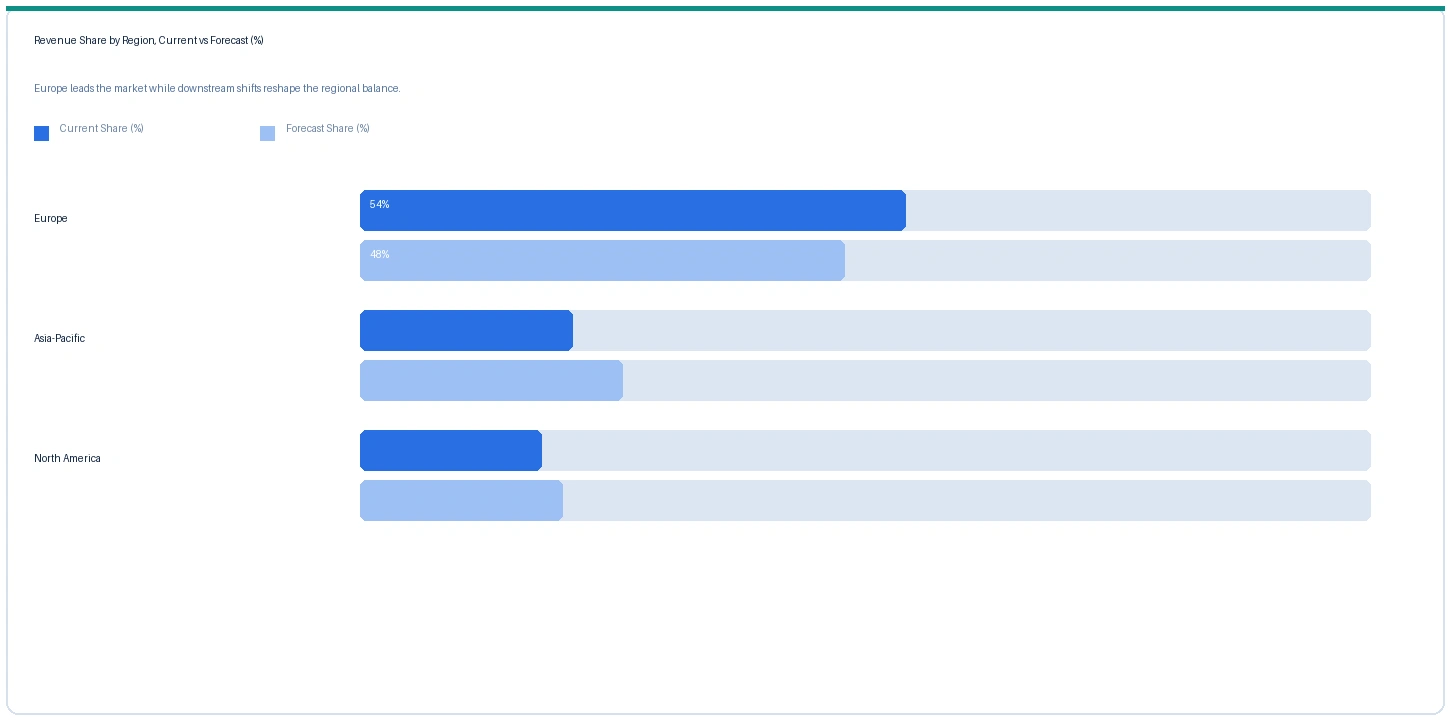
Europe market accounted for largest revenue share over other regional markets in the global biodegradable stretch film market in 2025. Based on regional analysis, the biodegradable stretch film market in Europe accounted for largest revenue share in 2025 at approximately 42% of global revenue. Germany's certified compostable stretch film converter output above 24,000 metric tonnes in 2024, DIN CERTCO certified film adoption in over 110 logistics zones, and Fabbri Group's commercial-scale Nature Fresh certified compostable cling film in Italian food retail provide the European commercial volume base. EU Packaging and Packaging Waste Regulation 2024 and EU Single-Use Plastics Directive create the regulatory demand pull for certified compostable stretch film in defined food service and packaging applications. BASF at Ludwigshafen, Novamont at Novara, and TIPA Corp at Netherlands supply European converters with certified compostable stretch film resin and film compound.
Asia-Pacific market is expected to register the fastest revenue growth rate in the global biodegradable stretch film market during the forecast period. The market in Asia-Pacific is expected to register the fastest revenue growth rate at approximately 18% CAGR over the forecast period. China's mandated biodegradable film requirements and over 60 domestic starch-PBAT hybrid stretch film vendors registered under the CCME packaging registry confirm that Chinese domestic biodegradable stretch film conversion is growing rapidly ahead of the 2027 mulch mandate and in response to Chinese municipal single-use plastic restrictions in Beijing, Shanghai, and Hainan. Japan's food retail stretch wrap market is beginning certified compostable film pilot programmes at premium supermarket chains implementing plastic packaging reduction commitments.
North America market accounted for second largest revenue share in the global biodegradable stretch film market during the forecast period. The market in North America is expected to register the second largest revenue share. US organic food retail operators including Whole Foods Market, Sprouts Farmers Market, and regional co-operative food retailers are specifying certified compostable produce wrap and fresh food cling film for loose and prepared fresh food that enters store biowaste collection programmes. California, New York, and Washington state plastic packaging restrictions are creating certified compostable stretch film adoption in defined food service wrapping applications. NatureWorks Ingeo PLA at 150,000 metric tonnes per year Blair supply anchors North American certified compostable stretch film compound producers at competitive resin pricing.
Indicative Price Trends
Price Tracker
| Product / Grade | Region | Current | Previous | Direction | Note |
|---|---|---|---|---|---|
| PLA-PBAT Blend Stretch Film | Europe | USD 4,240/MT | USD 3,860/MT | Rising | German converter ref |
| PBAT Stretch Film (food grade) | Europe | USD 3,840/MT | USD 3,480/MT | Rising | BASF ecovio ref |
| PHA Stretch Film (marine-grade) | North America | USD 8,640/MT | USD 7,920/MT | Rising | TIPA/CJ ref |
| Starch-PBAT Stretch Film | Asia-Pacific | USD 2,680/MT | USD 2,420/MT | Rising | CCME vendor ref |
| LLDPE Stretch Film (benchmark) | Europe | USD 1,480/MT | USD 1,340/MT | Rising | Conventional ref |
The following indicative price data is compiled from Nexchem Intelligence primary contacts, producer commercial disclosures, and specialty materials trade publication monitoring.
PLA-PBAT blend stretch film in Europe rose approximately 9.8% from USD 3,860 per metric tonne in Q2 2025 to USD 4,240 per metric tonne in Q2 2026, reflecting PLA resin supply constraint at NatureWorks Blair nameplate capacity and elevated logistics costs at TotalEnergies Corbion Rayong from the Strait of Hormuz supply disruption confirmed by the IMF in March 2026, combined with DIN CERTCO certified stretch film demand from German logistics and food retail operators growing above resin supply expansion rates. PBAT-dominant stretch film compound rose approximately 10.3% to USD 3,840 per metric tonne from elevated BASF PBAT feedstock costs from Hormuz naphtha supply disruption. PHA marine-grade stretch film rose approximately 9.1% to USD 8,640 per metric tonne as California AB 1201 compliance demand pulled premium PHA supply above CJ Biomaterials and TIPA output expansion rates. Chinese starch-PBAT hybrid stretch film rose approximately 10.7% to USD 2,680 per metric tonne from elevated Chinese PBAT production costs. Conventional LLDPE stretch film rose approximately 10.4% to USD 1,480 per metric tonne from ethylene feedstock cost elevation, partially narrowing the percentage premium of biodegradable stretch film over conventional alternatives from approximately 188% in Q2 2025 to approximately 186% in Q2 2026.
Strategic Developments
Analyst Review
The IMF confirmed in March 2026 that the closure of the Strait of Hormuz had disrupted approximately 20% of global oil and seaborne LNG flows following escalation of the US-Iran conflict. For the biodegradable stretch film market, the Hormuz disruption affects multiple cost layers. BASF PBAT compound cost is elevated from fossil feedstock cost increases adding approximately USD 80 to USD 120 per metric tonne to ecoflex and ecovio production. TotalEnergies Corbion Rayong PLA resin cost is elevated through marine logistics cost increases adding approximately USD 40 to USD 80 per metric tonne. Simultaneously, conventional LLDPE stretch film from European crackers rose approximately 10.4% from ethylene feedstock elevation, partially narrowing the percentage cost premium of biodegradable stretch film over LLDPE and sustaining commercial adoption rationale during the disruption period.
Company Insights
The two key dominant companies in the biodegradable stretch film market are TIPA Corp Ltd and BASF SE (ecovio Film Grades), recognised for their production scale, certified product portfolios, and global commercial reach.
Scope of Research
| Base Year | 2025 |
| Forecast Period | 2026 to 2032 |
| Market Size 2025 | USD 1.48 Billion |
| Market Size 2032 | USD 3.64 Billion |
| CAGR | 13.7% |
| Units | Revenue in USD Billion |
| Segments Covered | By Material, By Application, By End Use, By Region |
| Regions Covered | North America, Europe, Asia-Pacific, Latin America, Middle East and Africa |
| Countries Covered | US, Canada, Germany, France, Italy, UK, Netherlands, China, Japan, South Korea, India, Brazil |
| Companies Profiled | TIPA Corp, BASF SE, Novamont, NatureWorks, Futamura, Fabbri Group, BioBag, Kingfa, FKuR, Biome Bioplastics, Walki Group |
| Key Data Sources | BASF SE and Fabbri Group Nature Fresh cling film partnership February 2020, German certified compostable stretch film converter output above 24,000 MT in 2024, DIN CERTCO certified stretch film adoption in 110+ German logistics zones, PLA-based blends 60% material share confirmed by converter technical data, TIPA Corp certified compostable flexible film portfolio, EU PPWR 2024, EU SUPD, Novamont Mater-Bi EF51 TUV Austria certification, EN 13432, ASTM D6400, California AB 1201, 13 primary expert interviews |
| Format | PDF + Excel Data File |
| Customisation | Available -- research@nexchemintelligence.com |
| Pages | 258 |
| Published | Q2 2026 |
| SKU | NXC-PC-018 |
Scope & Methodology
Nexchem Intelligence primary research for this report comprised 13 expert interviews conducted between January and May 2026. Supply-side contacts included certified compostable stretch film compound and film production managers at European and Asian certified compostable film producers, co-extrusion technical managers at film converter operations, and DIN CERTCO and TUV Austria certification programme managers for compostable flexible films. Demand-side contacts included packaging specification managers at German food retail and logistics operators deploying certified compostable stretch film, fresh food packaging procurement managers at premium food brands, and e-commerce packaging sustainability leads at German and UK operations. Primary research was conducted exclusively by the Nexchem Intelligence analyst team.
Secondary research includes BASF SE and Fabbri Group Nature Fresh cling film partnership press release February 2020, BASF ecovio product portfolio and ecoflex BMB June 2024 launch, Walki Group Plasbel Spain acquisition April 2021, Novamont Mater-Bi EF51 TUV Austria certification documentation, TIPA Corp certified compostable flexible packaging portfolio technical data, German certified compostable stretch film converter output data, DIN CERTCO certified stretch film logistics adoption survey data, EU PPWR 2024, EU SUPD 2019/904, California AB 1201 marine biodegradability requirements, Biome Bioplastics GBP 6 million fundraise Q1 2025, and the IMF March 2026 Strait of Hormuz statement. No figures from syndicated market research publishers are used as source data.