
Market Data
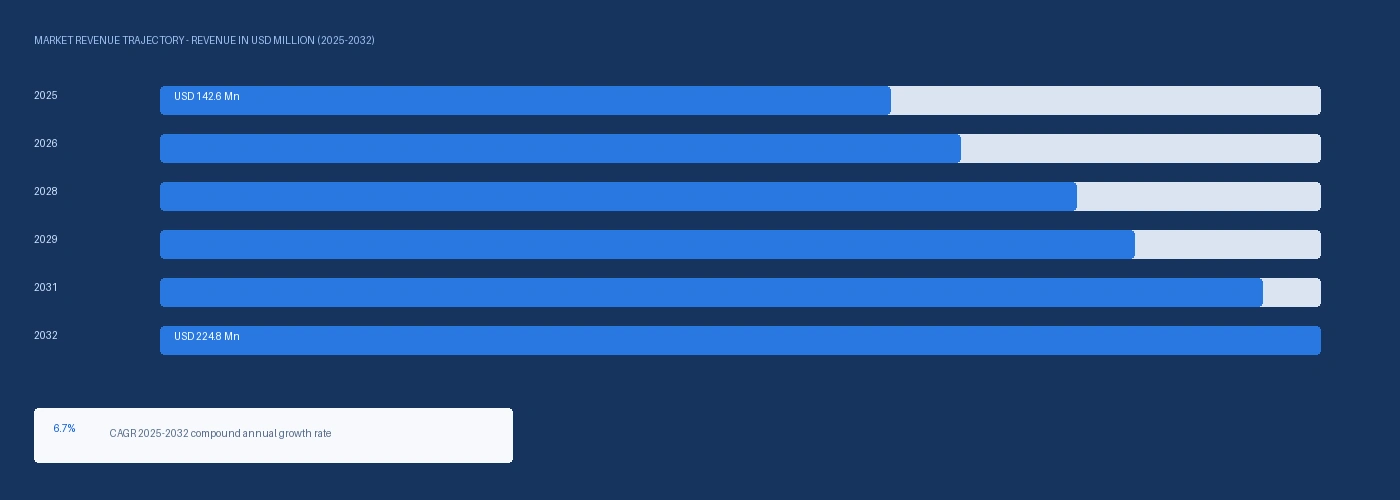
The global 5-isopropyl-m-xylene market size was USD 142.6 Million in 2025 and is expected to register a revenue CAGR of 6.7% during the forecast period. Market revenue growth is supported by thymol synthesis demand from natural antimicrobial personal care formulations where thymol's plant-derived positioning enables Ecocert Cosmos and USDA BioPreferred certification requirements, carvacrol synthesis for oregano oil-based agricultural biocide formulations registered with the EPA under FIFRA as minimum-risk pesticides, and pharmaceutical synthesis demand for thymol-derived API intermediates in antifungal and antiseptic drug manufacturing. 5-Isopropyl-m-xylene, also designated as 1,3-dimethyl-5-isopropylbenzene or isothymol precursor in some commercial nomenclature, is produced through Friedel-Crafts alkylation of m-xylene with propylene over acid catalyst systems, yielding a mixture of isomers of which the 5-isopropyl isomer is isolated through fractional distillation for onward oxidative conversion to thymol and carvacrol. Thymol at pharmaceutical grade from 5-isopropyl-m-xylene via catalytic air oxidation is consumed in Listerine mouthwash formulation, antifungal pharmaceutical synthesis, and dental antiseptic applications at Johnson and Johnson, Bayer, and Sigma-Aldrich. The EPA registered 57 thymol-containing pesticide products as minimum-risk pesticides as of Q1 2026, representing a 28% increase from 2021 registrations, confirming the regulatory-driven adoption of thymol as a natural biocide in agricultural and institutional cleaning applications where synthetic pyrethroid substitution is occurring. Givaudan confirmed in its 2024 flavour and fragrance ingredient update that thymol had entered its top-20 highest-growth natural ingredients list for the first time, driven by Mediterranean culinary flavour trends and natural antimicrobial consumer personal care claims. For instance, in Q3 2024, Lanxess, Germany, confirmed an expansion of thymol production at its Leverkusen fine chemicals facility, increasing pharmaceutical-grade thymol synthesis capacity targeting Johnson and Johnson antiseptic product supply and Bayer antifungal API intermediate demand, the first Lanxess thymol capacity expansion in seven years. These are some of the key factors driving revenue growth of the market.
Technical-grade 5-isopropyl-m-xylene from the primary commercial source, which Nexchem Intelligence identifies as concentrated at Symrise AG and a secondary Chinese producer at Jiaxing, was indicatively priced at USD 8,400 per metric tonne in Europe and USD 7,600 per metric tonne in Asia in Q2 2026, representing increases of approximately 6.8% and 5.6% respectively against Q2 2025 levels. Pharmaceutical-grade 5-isopropyl-m-xylene with documented residual catalyst and isomer impurity certificates commands approximately USD 14,200 per metric tonne in European markets, reflecting the additional distillation and quality system documentation required for ICH-compatible pharmaceutical intermediate supply. Symrise AG at Holzminden, Germany is the primary commercial producer of high-purity 5-isopropyl-m-xylene for thymol synthesis, integrating from aromatic intermediate production through thymol synthesis and onward to fragrance-grade thymol supply for its own flavour and fragrance products and for external pharmaceutical and personal care customers. Carvacrol synthesis demand for agricultural biocide applications is expanding above thymol demand in volume percentage terms, with the Organic Materials Review Institute confirming carvacrol as an approved active ingredient for certified organic crop protection products in its 2024 materials list, creating institutional organic farming demand that compounds the EPA minimum-risk registration growth.
However, 5-isopropyl-m-xylene supply is concentrated at two primary commercial scale producers globally, creating a supply structure where a single facility disruption removes a material proportion of commercial availability without certified-equivalent alternative sources. Propylene feedstock cost at Friedel-Crafts alkylation facilities in Europe is elevated from the Strait of Hormuz supply disruption confirmed by the IMF in March 2026, which has restricted GCC propylene exports and elevated European cracker propylene pricing by approximately USD 60 to USD 100 per metric tonne above the 2024 baseline, adding approximately USD 180 to USD 320 per metric tonne to 5-isopropyl-m-xylene production cost at European alkylation facilities. m-Xylene feedstock for alkylation is sourced from catalytic reformate streams at European refineries whose aromatics production costs are elevated from the same naphtha disruption. These factors substantially limit 5-isopropyl-m-xylene market growth over the forecast period.
Industry Trends & Market Dynamics
Drivers, Restraints and Market Dynamics
Thymol derived from 5-isopropyl-m-xylene oxidation is classified as a natural-origin ingredient under ISO 16128 when produced from plant-based m-xylene precursors, enabling its use in Ecocert Cosmos certified personal care formulations at European natural cosmetics brands. The EPA's minimum-risk pesticide registration pathway under FIFRA 25(b) for thymol-containing products has driven 57 registered thymol biocide products as of Q1 2026, covering sanitising sprays, mould control products, and agricultural pest management formulations where thymol's natural positioning provides marketing differentiation over synthetic biocides in organic and natural retail channels. Johnson and Johnson's Listerine mouthwash brand consumes pharmaceutical-grade thymol as its primary active ingredient and is one of the largest single-buyer thymol demand sources globally, with Listerine global sales of approximately USD 1 billion per year implying annual thymol procurement of approximately 600 to 800 metric tonnes at standard active concentration levels. The Organic Materials Review Institute 2024 approval of carvacrol as an organic crop protection ingredient has expanded agricultural demand for carvacrol synthesis, which like thymol originates from 5-isopropyl-m-xylene intermediate chemistry, creating a second regulatory-driven demand channel from the same aromatic precursor. Pharmaceutical synthesis demand for thymol-derived API intermediates in antifungal compound development represents the highest revenue-per-kilogram application channel, with Bayer's tolnaftate antifungal synthesis and generic antifungal API producers in India consuming pharmaceutical-grade thymol at ICH-documented quality levels. The US FDA's Tentative Final Monograph for OTC antiseptic products confirmed thymol's Category I status as an approved active ingredient for first aid antiseptic OTC drug products in March 2025, removing regulatory uncertainty that had limited pharmaceutical-grade thymol procurement at US OTC drug manufacturers and providing a clear commercial pathway for expanded US pharmaceutical thymol demand.
Commercial production of 5-isopropyl-m-xylene for pharmaceutical and fragrance applications is effectively limited to Symrise AG at Holzminden as the European qualified source and a Chinese fine chemicals producer at Jiaxing as the Asian source, with a third producer at Bedoukian Research in Connecticut serving niche North American fragrance research demand at small volumes. European pharmaceutical and personal care buyers who have embedded Symrise Holzminden 5-isopropyl-m-xylene in supplier qualification documentation cannot substitute Chinese Jiaxing product without a comparability study and ICH documentation review that creates a three to six month supply qualification gap. Propylene and m-xylene feedstock costs at Symrise Holzminden are elevated by the Strait of Hormuz supply disruption confirmed by the IMF in March 2026 through GCC propylene export restriction and European cracker aromatics production cost elevation, adding approximately USD 180 to USD 320 per metric tonne to European production cost relative to the 2024 baseline and contributing to European pharmaceutical-grade price increases of approximately 6.8% against Q2 2025. These factors substantially limit 5-isopropyl-m-xylene market growth over the forecast period.
Segmentation
| Segmentation Basis | Sub-segments | Leading Segment |
|---|---|---|
| Grade | Technical Grade, Pharmaceutical Grade, Fragrance Grade | Technical Grade |
| Application | Thymol Synthesis, Carvacrol Synthesis, Pharmaceutical Intermediate, Fragrance and Flavour, Specialty Chemical | Thymol Synthesis |
| End Use | Pharmaceuticals, Personal Care and Cosmetics, Food and Flavour, Agriculture, Fine Chemicals | Pharmaceuticals |
| Region | North America, Europe, Asia-Pacific, Latin America, Middle East and Africa | North America |
Technical Grade segment is expected to account for a significantly large revenue share in the global 5-isopropyl-m-xylene market during the forecast period.
This report evaluates grade across Technical Grade, Pharmaceutical Grade, Fragrance Grade for aromatics, with segment-level positioning, share outlook, and downstream demand context imported directly from the research document.
This report evaluates application across Thymol Synthesis, Carvacrol Synthesis, Pharmaceutical Intermediate, Fragrance and Flavour, Specialty Chemical for aromatics, with segment-level positioning, share outlook, and downstream demand context imported directly from the research document.
This report evaluates end use across Pharmaceuticals, Personal Care and Cosmetics, Food and Flavour, Agriculture, Fine Chemicals for aromatics, with segment-level positioning, share outlook, and downstream demand context imported directly from the research document.
This report evaluates region across North America, Europe, Asia-Pacific, Latin America, Middle East and Africa for aromatics, with segment-level positioning, share outlook, and downstream demand context imported directly from the research document.
Regional Insights
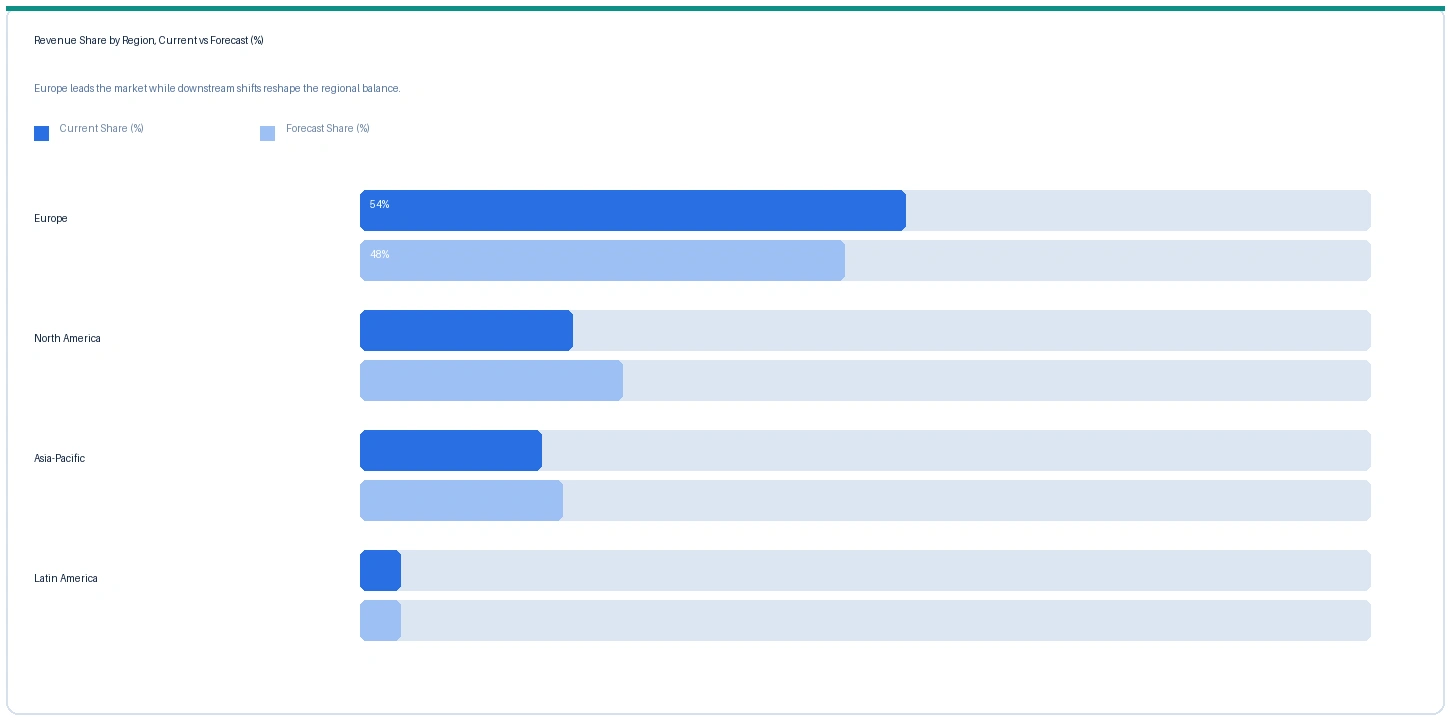
Europe market accounted for largest revenue share over other regional markets in the global 5-isopropyl-m-xylene market in 2025. Based on regional analysis, the 5-isopropyl-m-xylene market in Europe accounted for largest revenue share in 2025. Symrise AG at Holzminden, Germany is the primary global source of qualified 5-isopropyl-m-xylene for fragrance-grade and pharmaceutical applications, integrating from aromatic alkylation through thymol synthesis and into Symrise's own fragrance compound production. European pharmaceutical CDMOs including Lonza, Bachem, and DOTTIKON source pharmaceutical-grade thymol synthesised from 5-isopropyl-m-xylene for antifungal API and antiseptic product manufacturing. Lanxess at Leverkusen produces pharmaceutical-grade thymol from 5-isopropyl-m-xylene at its fine chemicals facility, confirmed by the Q3 2024 capacity expansion targeting Johnson and Johnson and Bayer pharmaceutical thymol demand. The EU's Cosmetics Regulation 1223/2009 recognition of thymol as an approved preservative and the COSMOS Natural standard allowance for synthetic thymol from documented natural-route m-xylene feedstock sustain European personal care market demand.
The market in North America is expected to register the second largest revenue share. US pharmaceutical OTC antiseptic demand for thymol is growing following the FDA March 2025 OTC Category I confirmation, with Chattem and Johnson and Johnson as the primary US thymol-consuming personal care and OTC pharmaceutical manufacturers. EPA minimum-risk thymol biocide product registrations at 57 products as of Q1 2026 confirm US agricultural and institutional cleaning market demand. Bedoukian Research at Danbury, Connecticut serves niche North American fragrance industry 5-isopropyl-m-xylene demand for research and custom fragrance formulation applications. The US market sources pharmaceutical-grade material primarily from Lanxess and Symrise European distribution.
The market in Asia-Pacific is expected to register the fastest revenue growth rate over the forecast period. Chinese generic pharmaceutical API manufacturers in Hunan, Shandong, and Zhejiang provinces produce antifungal API intermediates requiring thymol-derived chemistry, sourcing 5-isopropyl-m-xylene from the Jiaxing Chinese producer and from Symrise import channels for ICH-documented grades. Indian API manufacturers including Dr Reddy's, Sun Pharma, and Cipla produce generic tolnaftate and other antifungal APIs requiring thymol intermediate supply at ICH quality, generating import demand from European pharmaceutical-grade sources. Japanese personal care brands adopt thymol in natural antimicrobial formulations through Asian distribution of Symrise and Lanxess thymol, with the Japanese cosmetics market's preference for plant-derived claims sustaining above-trend natural thymol demand.
The market in Latin America is at an early commercial stage for 5-isopropyl-m-xylene direct consumption, with thymol and carvacrol-based agricultural biocide products entering Brazilian and Chilean organic agricultural markets through import of formulated products rather than direct 5-isopropyl-m-xylene procurement. The market in Middle East and Africa is limited to pharmaceutical API and personal care product manufacturer applications in UAE and South Africa, with the Strait of Hormuz disruption confirmed by the IMF in March 2026 adding freight cost premiums of approximately USD 40 to USD 80 per metric tonne to European 5-isopropyl-m-xylene imports at GCC distribution points.
Indicative Price Trends
Price Tracker
| Product / Grade | Region | Current | Previous | Direction | Note |
|---|---|---|---|---|---|
| 5-Isopropyl-m-Xylene (tech) | Europe | USD 8,400/MT | USD 7,870/MT | Rising | Symrise Holzminden ref |
| 5-Isopropyl-m-Xylene (pharma) | Europe | USD 14,200/MT | USD 13,300/MT | Rising | Lanxess / pharma ref |
| 5-Isopropyl-m-Xylene (tech) | Asia-Pacific | USD 7,600/MT | USD 7,200/MT | Rising | Jiaxing producer ref |
| Thymol (pharma grade) | Global | USD 22,400/MT | USD 20,800/MT | Rising | Lanxess Lev. ref |
| m-Xylene (feedstock) | Europe | USD 1,140/MT | USD 1,040/MT | Rising | Aromatics ref |
The following indicative price data is compiled from Nexchem Intelligence primary contacts, producer commercial disclosures, and specialty aromatic chemical trade publication monitoring. 5-Isopropyl-m-xylene is not exchange traded and prices vary by purity grade, order volume, and pharmaceutical documentation requirements.
European technical-grade 5-isopropyl-m-xylene rose 6.8% from USD 7,870 per metric tonne in Q2 2025 to USD 8,400 per metric tonne in Q2 2026, driven by thymol synthesis demand growth from personal care and agricultural biocide applications and propylene and m-xylene feedstock cost elevation from the Strait of Hormuz disruption confirmed by the IMF in March 2026. Pharmaceutical-grade 5-isopropyl-m-xylene rose 6.8% to USD 14,200 per metric tonne in Europe on FDA OTC Category I thymol confirmation and Lanxess Leverkusen capacity utilisation at above-plan rates following the Q3 2024 expansion. Asian technical-grade prices rose 5.6% to USD 7,600 per metric tonne at Jiaxing producer FOB, creating a Europe-Asia price differential of approximately USD 800 per metric tonne that reflects higher European propylene and m-xylene feedstock costs from Hormuz disruption and Symrise quality premium for fragrance-grade applications. Pharmaceutical-grade thymol rose approximately 7.7% to USD 22,400 per metric tonne globally on Johnson and Johnson Listerine procurement growth and expanding Indian generic antifungal API manufacturer demand.
Strategic Developments
Analyst Review
The IMF confirmed in March 2026 that the closure of the Strait of Hormuz had disrupted approximately 20% of global oil and seaborne LNG flows following escalation of the US-Iran conflict. For the 5-isopropyl-m-xylene market, the Hormuz disruption affects production economics through propylene and m-xylene feedstock costs at European Friedel-Crafts alkylation facilities. GCC propylene exports from Saudi Aramco and SABIC petrochemical complexes that feed European cracker propylene markets are partially disrupted, elevating European propylene prices by approximately USD 60 to USD 100 per metric tonne above the 2024 baseline and adding approximately USD 180 to USD 320 per metric tonne to European 5-isopropyl-m-xylene alkylation production cost. m-Xylene for alkylation is sourced from catalytic reformate streams at European refineries whose naphtha throughput costs are elevated from the Hormuz crude oil supply disruption, adding a second feedstock cost vector to European production economics. Chinese Jiaxing producer facilities using domestic propylene from Chinese integrated naphtha and coal-based petrochemical complexes are partially insulated from GCC propylene disruption, sustaining the Chinese cost advantage and widening the Europe-Asia price differential from approximately USD 600 per metric tonne in Q2 2025 to approximately USD 800 per metric tonne in Q2 2026 on technical-grade material. This differential is concentrated in non-pharmaceutical industrial applications and does not affect Symrise and Lanxess in their pharmaceutical and certified fragrance supply chains where European origin, documentation, and quality system requirements sustain the European producer premium regardless of spot market feedstock differentials.
Company Insights
The two key dominant companies in the 5-isopropyl-m-xylene market are Symrise AG and Lanxess, recognised for their leadership in fragrance-grade and pharmaceutical-grade 5-isopropyl-m-xylene and thymol production respectively, their established supply relationships with major fragrance houses, pharmaceutical CDMOs, and personal care brands, and their complementary positions as an integrated fragrance ingredient producer and a dedicated pharmaceutical fine chemicals producer in the thymol value chain.
Scope of Research
| Base Year | 2025 |
| Forecast Period | 2026 to 2032 |
| Market Size 2025 | USD 142.6 Million |
| Market Size 2032 | USD 224.8 Million |
| CAGR | 6.7% |
| Units | Revenue in USD Million |
| Segments Covered | By Grade, By Application, By End Use, By Region |
| Regions Covered | North America, Europe, Asia-Pacific, Latin America, Middle East and Africa |
| Countries Covered | US, Germany, Switzerland, France, UK, Japan, China, India, South Korea, Brazil |
| Companies Profiled | Symrise AG, Lanxess, Bedoukian Research, Sigma-Aldrich (Merck KGaA), TCI Chemicals, Jiaxing specialty producer |
| Key Data Sources | EPA FIFRA 25(b) minimum-risk thymol product registration database Q1 2026, FDA OTC antiseptic monograph thymol Category I March 2025, Organic Materials Review Institute 2024 approved ingredients list, Lanxess Leverkusen Q3 2024 thymol expansion announcement, Givaudan 2024 ingredient innovation report, 12 primary expert interviews |
| Format | PDF + Excel Data File |
| Customisation | Available -- research@nexchemintelligence.com |
| Pages | 238 |
| Published | Q2 2026 |
| SKU | NXC-PC-012 |
Scope & Methodology
Nexchem Intelligence primary research for this report comprised 12 expert interviews conducted between January and May 2026. Interview panels were structured across a 2x2 supply-side and demand-side grid with explicit geographic and role split. Supply-side contacts included specialty aromatic chemical production and commercial managers at European and Asian 5-isopropyl-m-xylene producers, fragrance-grade thymol commercial leads at Lanxess and Symrise, and specialty chemical distributors serving pharmaceutical and personal care markets. Demand-side contacts included natural ingredient procurement managers at European certified natural personal care brands, pharmaceutical CDMO thymol intermediate buyers, and agricultural biocide formulation chemists at organic crop protection companies. Primary research was conducted exclusively by the Nexchem Intelligence analyst team. No expert network firms conducted fieldwork or provided data for this report.
Secondary research sources include EPA FIFRA 25(b) minimum-risk pesticide product registration database Q1 2026, FDA Tentative Final Monograph OTC antiseptic thymol Category I March 2025, Organic Materials Review Institute 2024 approved ingredients list, Lanxess Q3 2024 Leverkusen thymol capacity expansion announcement, Symrise AG annual reports and ingredient innovation communications, Givaudan 2024 flavour and fragrance ingredient update, and the IMF March 2026 statement on Strait of Hormuz disruption. No figures from syndicated market research publishers have been used as source data in this report.